
What Is Formal English?
Formal English is the style used in serious, professional or academic contexts. It follows standard English conventions, uses more precise grammar, avoids slang, and tends to use more complex sentence structures. You will hear this type of language in business meetings, presentations, conferences, job interviews, and academic writing. In written communication—especially emails—we use formal vocabulary, fewer contractions, and a polite, structured tone.
Below are some examples of how formal English appears in real contexts.
Business Emails
- I hope this message finds you well.
- May I kindly ask you to … ?
- I appreciate your prompt response.
- Please let me know if there is anything I can do to assist.
- I apologise for any inconvenience this may have caused.
- This email is to confirm…
- Thank you for your attention to this matter.
- Best regards, / Sincerely,
You’ll notice the language is polite, measured and appropriate for a workplace audience. These phrases are used in formal emails because the context requires professionalism.
Business Meetings
- Let’s get started by reviewing the objectives for this meeting.
- The first item on our agenda is…
- As you can see from this chart…
- I’d like to hear your input on this, (Name).
- How do you think we should proceed?
- In the interest of time, let’s move on…
- Before we adjourn, does anyone have any final comments?
Here, formal language helps structure discussion and maintain order. The sentence patterns are clear, neutral and suitable for a group of people you may not know well.

Job Interviews
- We appreciate your interest in this position.
- What attracted you to this role?
- Can you describe a challenge you faced…?
- How do you prioritise tasks when managing multiple projects?
- What software/tools are you most proficient with?
- Describe a situation where you had to make a quick decision…
- We’ll be in touch within (time frame) to let you know the next steps.
These phrases show how formal English maintains clarity and respect in more serious situations.
Greetings and Farewells (Formal)
- It’s a pleasure to meet you.
- Good day.
- Have a productive day ahead.
- Take care.
- Nice to have met you.
What Is Informal English?
Informal English is relaxed, casual and commonly used with friends and family, in text messages, online comments, or in spontaneous conversation. It uses contractions, everyday vocabulary, slang, abbreviations, and shorter sentence structures. The tone is friendly and natural, and it matches situations that are more relaxed.
Informal Greetings and Farewells
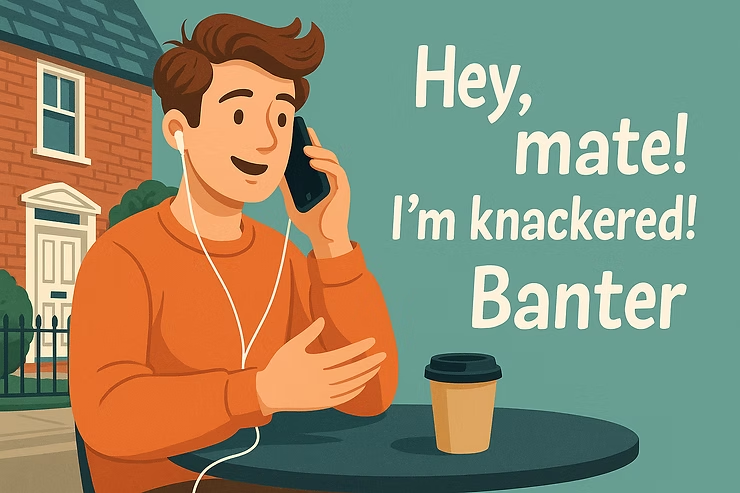
- Hey, mate!
- Alright?
- Hiya!
- Morning.
- How’s it going?
- See ya!
- Cheers!
- Have a good one!
- I’m off!
- Catch you later.
These are very common in British informal speech and are acceptable when speaking to people you know well.
Everyday Conversations (Informal)
- Fair enough.
- No worries!
- Can’t be bothered.
- Sorted.
- I’m knackered!
- Under the weather.
- Can’t complain.
- It’s not my cup of tea.
- Blimey!
- I’ll give it a go!
- I’m gutted!
- Banter.
This is informal English in everyday use — natural, warm and spontaneous.
Talking With Friends and Family
- Can’t wait for the weekend…
- Wanna grab some lunch?
- That film was a bit rubbish!
- Could you give me a hand with this?
- That’s a good shout!
- Fair enough, I see your point.
Informal English often reflects comfort and familiarity with the person or group of people you’re speaking to.

Key Differences Between Formal and Informal English
Although both styles belong to the same language, there are clear distinctions:
1. Vocabulary Choice
Formal English uses more precise, academic vocabulary:
- Assist, apologise, essential, enquire, reside, obtain
Informal English uses everyday words and slang:
- Help, sorry, important, ask, live, get
2. Contractions and Abbreviations
- Informal English uses contractions such as I’m, don’t, can’t, wanna.
- In academic writing and professional emails, we use formal vocabulary and avoid contractions.
3. Grammar and Sentence Structure
Formal English tends to use:
- full sentence structures
- fewer personal pronouns
- more neutral, structured tone
Informal English allows:
- fragments in text messages
- relaxed grammar
- emojis and abbreviations when appropriate
- more natural speech patterns
4. Context and Audience
Understanding your audience is essential. Ask yourself:
- Who am I speaking or writing to?
- Is this a relaxed or serious environment?
- Do I need to sound more professional or more friendly?
This awareness helps you adapt your language and choose whether to use formal or informal English.
Tips for Choosing the Right Style
1. Consider the Situation
Professional environment? Use formal language. Relaxed, social environment? Use informal English.
2. Think About Your Relationship With the Person
- Close friends, family = informal
- Teachers, colleagues, managers = formal
3. Match the Purpose
- Emails, presentations, writing essays → formal
- Messages, everyday conversation → informal
Using the correct style will help you sound more professional at work and more relaxed and natural when speaking casually.
Summary: Key Things to Remember
- Formal English is polite, structured and used in professional or academic situations.
- Informal English is casual and spontaneous, used with people you know well.
- Choosing the right tone helps you communicate clearly and appropriately.
- Your audience and context decide whether to use formal or informal language.
- Knowing both styles helps you switch confidently between them in everyday life